
Anthony Bandiero, Attorney and Senior Legal Instructor, Blue to Gold Law Enforcement Training
A roadside chat on consent searches and common authority. The question comes from an officer in Wisconsin, where a state supreme court case says the driver’s consent reaches a passenger’s jacket left in the van. Anthony disagrees with that case, and explains why most courts do too.
We have a doozy. Actually, this is going to be a good one, because we have a question from an officer in Wisconsin, and basically the question is, does a driver’s consent give you authority to search a passenger’s belongings?
Okay, the answer is no. The answer is no. However, the reason it’s going to be a doozy is because we have a supreme court case in Wisconsin that says the opposite.
What did the Wisconsin Supreme Court say in State v. Matejka?
The case is State v. Matejka. I think I’m saying that correctly. The citation is 241 Wisconsin 2d 52, 2001. I might be butchering the name, but it’s M-A-T-E-J-K-A.
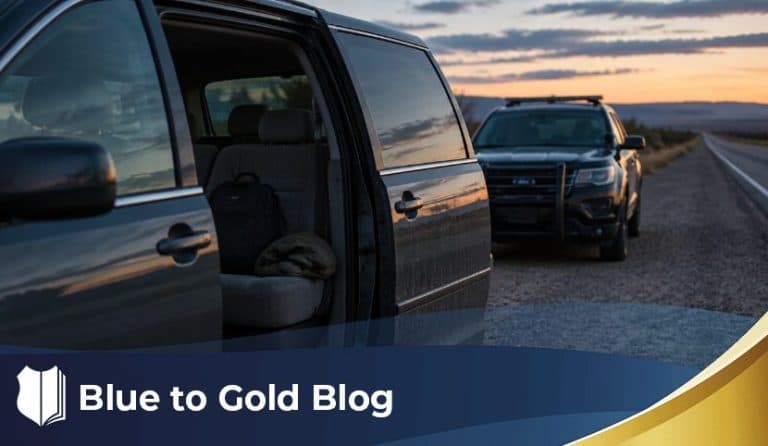
Basically what happened there was an officer got consent to search a van. There’s multiple occupants in there. The passengers asked for their jackets, and while the officers are handing out the jackets to the passengers, the officer is searching them. Finds drugs against Matejka and charges her.
The Wisconsin Supreme Court said, and this is paraphrasing here, a driver’s consent to search a vehicle in which the defendant was a passenger justified the warrantless search of the defendant’s jacket that was in the vehicle, where the jacket was left in the common area of the vehicle, the defendant was aware that the driver consented to the search of the common area of the vehicle, and she made no attempt to prevent the search.
So, but that’s just going to be wrong. In my opinion, it’s bad law. It happens, right? That’s why we have the U.S. Supreme Court, because we have situations where state courts rule incorrectly, in my opinion. Now, this case was appealed to the Supreme Court. They did not hear it. That may mean that they buy off on it, that they agree with it, or it may mean that they’re waiting for a different case with different facts to render their opinion on the issue.
But let’s go through some reasoning of why I don’t believe that this is a lawful search.
What is common authority for a consent search?
Number one is, as the Wisconsin court pointed out, these searches of other people’s property are based off of common authority. Common authority, as defined by the U.S. Supreme Court, comes from a case called Matlock, and also a case called Illinois v. Rodriguez, that defines that you have to just be reasonable about believing that the person has the authority to search.
But basically, another way of saying common authority is, look, does the person giving consent, does it appear that they can conduct the search in their own right? That makes sense. Do we believe that they can do the exact same thing that we want to do? That is what common authority essentially means.
Can a driver consent to a search of a passenger’s backpack?
Now let’s look at applying this to the passenger’s property. So let me use a friend as an example. My friend and I are in my car. We’re driving to the mall. We get pulled over. The cop says, Anthony, can I search your car? I say yes, but the backpack is my friend’s. That backpack isn’t mine. And then the cop says, okay, but can I search it anyway? And I say yes.
Now, the cop goes up to the car and says, hey, Anthony gave me consent to search the car. My friend leaves his backpack in the car because he doesn’t want to carry it, and comes out. Now the officer searches my friend’s backpack and finds evidence against him. Are we good?
No, we’re not good. Because the cop knows I have no common authority over the backpack. It’s not reasonable to believe that I can conduct the same search in my own right. I mean, that’s not how society works, where you’re in my car and I’m like, hey, I’m going to start going through your backpack. And you’re like, what are you doing? I don’t know, I have common authority over it, don’t I? No, you don’t. That’s my backpack. Why are you going through my stuff?
So that’s the logic here. And so I believe that cops are continuing to make bad case law in Wisconsin. They have the supreme court case on their side, so the cops can follow it. But I’m just telling you that at the end of the day, this will be resolved, and I strongly believe this, it’s going to be resolved in favor of the defendant.
Does a passenger have to object to stop a consent search?
Now, the other thing is the court said that the defendant did not say anything to stop the search. Well, you don’t have to say something to prevent an unlawful search. I like to say that silence is not consent. We learned that in high school, in college. Silence is not consent.
So if somebody’s told, hey, I’m going to search the car, and the person has personal property that’s clearly their personal property, why do they have to say something to prevent the search? I mean, what if they’re a mute? What if they don’t quite understand what’s going on? What if they don’t speak the native language and they don’t say anything? That means that they consented? No, my friends. Silence is not consent.
Which courts say a driver cannot consent to a passenger’s property?
Now, in my defense, about being on the right side of the law here, let me share with you some research. Let me share with you who agrees with Wisconsin. There’s a Third Circuit case that agreed with it. There’s a Louisiana appellate court case that agreed with it. And that’s it. You got three cases I can find that agree that the driver can give consent to search a passenger’s belongings when the passenger is on scene and the cop knows it’s the passenger’s stuff. Three courts I found.
Here’s who doesn’t agree with Wisconsin. The Fifth Circuit in two cases. The Eighth Circuit. The state of Florida. The state of Illinois. The state of Indiana. The state of Minnesota. The state of Nebraska. The state of New Jersey. The state of North Dakota. The state of Pennsylvania. And the state of South Dakota. All hold otherwise.
Now, I have seen some situations out there where a bunch of people are wrong, but it’s rare in case law, because usually they have to defend themselves. It’s not just making up their minds, oh, you know what, we don’t think they can do that. No, they have to base it off of case law. So they have to be reasoned and defensible. And the vast majority of courts who have addressed this issue have said no way. And they are right, again, in my opinion.
Why is consent to search a car different from probable cause to search it?
Very good question. I’m actually very passionate about this question, because it just seems so offensive to me that the court would say that drivers can carte blanche give consent to search property of another person in a car. But yet they couldn’t do that in the house. A co-tenant couldn’t give consent to search a co-tenant’s room. Why are they holding otherwise for a car?
And their reasoning, by the way, is very illogical. They’re saying, hey, consent to search a car is the same as almost having PC to search the car. So if you had probable cause to search the car, you could search any container in there, including a passenger’s belongings.
But that is completely and utterly different. Probable cause that drugs are in the car could mean that the drugs are in the passenger’s property. That’s just the way it is. The passenger’s privacy interests must give way to the legitimate interest in finding contraband. But we are talking about consent searches here. They’re not probable cause searches. So just because the driver gave consent to search the vehicle doesn’t mean everything in there is fair game.
Look, I hope you agree with me, and if you don’t, we’re going to still be friends. If you’re an officer in Wisconsin and you’re out there searching cars because of this case, look, you’re not violating Wisconsin case law. It says what it says. But I know that at the end of the day, this is probably one of those things that when it goes to a higher court, whether it’s the circuit court or the Supreme Court, they have to find that’s unreasonable under the Fourth Amendment. So it’s not going to survive at the end of the day. And as I said, the majority of the court cases are in my favor too.
The short version
- Does a driver’s consent give you authority to search a passenger’s belongings? The answer is no.
- Wisconsin’s State v. Matejka says the opposite. In my opinion, it’s bad law. The U.S. Supreme Court did not hear the appeal, which may mean they agree with it, or may mean they’re waiting for a different case.
- Common authority means the person giving consent could conduct the search in their own right. A driver cannot do that with a passenger’s backpack, and the cop knows it.
- Silence is not consent. A passenger does not have to say something to prevent an unlawful search.
- Three courts agree with Wisconsin. The Fifth Circuit, the Eighth Circuit and nine states hold otherwise.
- Consent searches are not probable cause searches. Just because the driver gave consent to search the vehicle doesn’t mean everything in there is fair game.
That’s my little takeaway. We don’t really talk a lot about circuit splits and conflicts in courts, but a lot of the stuff I teach, there are cases out there that disagree. What I teach is best practice, and what I teach is always, at the end of the day, what do I think the Supreme Court would say, even if a state court disagrees with me. This is an example of that. Take it for what it’s worth.
Until next time, stay safe, my friends.
Related from Blue to Gold
- Consent from Non-Owner to Search Vehicle
- Can You Search a Driver or Passenger Based on a K9 Alert on a Vehicle?
- Searching Passengers for Marijuana
This article is a lightly edited transcript of a Blue to Gold roadside chat and is for training purposes only. It is not legal advice. Check your own state law and your prosecutor before acting. Source video: Ep. #72